
Expert Plumbers Co
Drain Cleaning in Columbus, OH near me
Columbus, OH · 43085 24/7 phone line

Columbus Drain Cleaning for Slow and Backed-Up Lines

The kitchen sink drains slow, the basement floor drain is gurgling, and it gets worse after a hard rain. Tell us what you are seeing and we connect you with an independent Columbus plumber to clear it, so call (380) 262-9173.

Nationwide Coverage
Symptom-First Matching
24/7 Emergencies
No Obligation
24/7
Live phone line

Drain Cleaning enquiry

Ask about Drain Cleaning in Columbus, OH

Tell us what the drain is doing and we connect you with an independent local Plumber.

Prefer to talk?
(380) 262-9173

Drain Cleaning services

Drain Cleaning and Plumbing Services in Columbus, OH

Symptom-led Drain Cleaning and related services across Columbus, OH. Tell us what the drain is doing and we match it to the right plumber.

01 / 06

Drain Cleaning

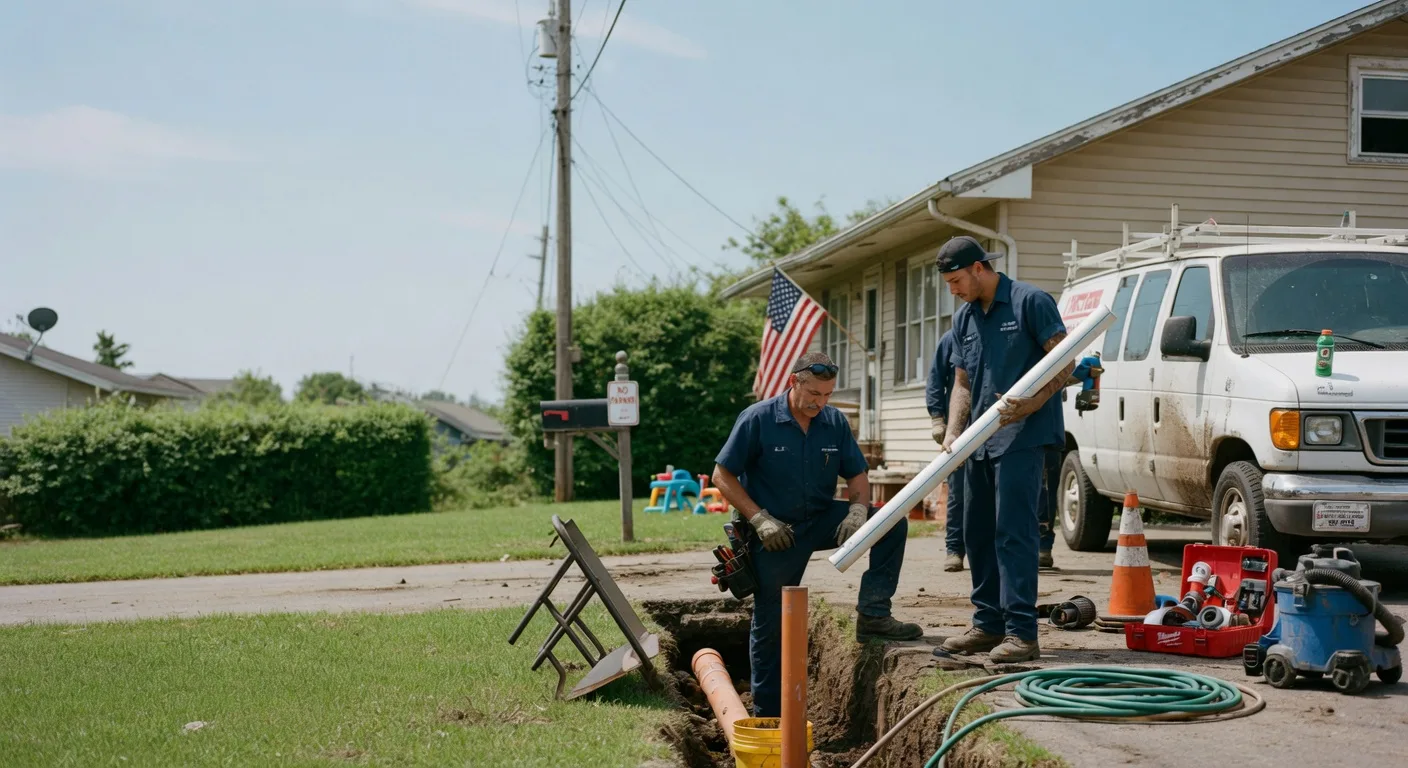
A single sink, tub, or floor drain running slow in Columbus, OH usually means one localized clog, not a whole-house problem, and a cable machine can clear it.

Talk to a pro
03 / 06

Main Line Cleaning

Every drain in the house backing up at once in Columbus, OH points to the main line, not one fixture, and needs a larger cable or jetting.

Talk to a pro
05 / 06

Sewer Line Inspection

Recurring backups or slow drains across Columbus, OH with no clear cause? A camera inspection finds the actual break, root, or bellied section first.

Talk to a pro
06 / 06

Sewer Line Repair

Multiple drains backing up at once in Columbus, OH, water pooling around a cleanout, or sewage odor in the yard usually points to a damaged sewer line, not a single clog.

Talk to a pro

About Expert Plumbers Co

Drain Cleaning and Plumbing Company in Columbus, OH

Columbus neighborhoods were built in waves, so the drain age depends on the street. The one constant in older homes is the lateral. The city's Blueprint Columbus program describes the lateral in an older home as usually clay pipe that cracks or fills with tree roots.

Clintonville (43202, 43214) has a south end where most houses predate 1930, among them foursquares and catalog kit homes. The Hilltop (43204, 43222, 43223, 43228) is largely Cape Cods and Craftsman bungalows from the 1920s and 1930s. Linden (43211) saw heavy subdivision in the 1920s. Olde Towne East (43205) has houses from the 1830s onward, many later divided into apartments. German Village (43206) is narrow-lot red brick from the nineteenth century. Clintonville, Linden and the Hilltop are all on the list for Blueprint Columbus lateral lining.

  • Root intrusion at a clay joint. Roots enter a separated joint, grab paper, and the toilet and the basement floor drain slow together.
  • Combined sewers downtown. The city says downtown, Victorian Village (43201) and German Village are served by combined sewers, where storm and household water share one pipe. Wet weather can load that pipe.
  • Clear water in the sanitary sewer. Where the sewers are separate, leaky laterals let rain into the sanitary side, which was not built for it, and that is a stated cause of basement backups.
  • Kitchen grease. The city notes fats, oils and grease reduce sewer capacity and cause blockages and backups into homes. In the house, the same grease coats the kitchen line.
  • Mineral scale. Hard water leaves scale on old cast iron and galvanized lines, so a pipe that drained fine is now rough inside and narrower.

Old clay and roots are a common reason a clog in an older Columbus home comes back. Say whether it is one fixture or all of them when you describe it to the plumber you are connected with.

01

Symptom-first

One slow fixture is a different job from every drain in the house backing up.

02

Independent

Pricing and on-site work are set by the local provider, not by us.

03

Local

Partners serve the city you called from.

04

Whole-system

Fixture drains, branch lines, main line and sewer lateral.

Why choose us for Drain Cleaning

Columbus, OH Plumbers for Drain Cleaning

The homeowner's words: "the basement floor drain is gurgling," "the sink empties, then fills back up," "sewage smell and water in the basement after it rained." A single slow sink is a local clog in the trap or branch. Every drain slow together, or the basement first, means the main line, the lateral or the street.

Stop running water and call now if: sewage is coming up a floor drain or basement toilet, several fixtures back up together, or water is reaching the furnace or panel. In Columbus the city's Sewer Maintenance Operations Center takes backup reports around the clock through 311, and its crews can check the public main from the nearest manhole. Report it, keep the service request number, and ask the plumber to check the private line. If the city sewer is at fault, the Project Dry Basement program covers an approved backflow prevention device for single and two-family homes that have had a backup.

Safe homeowner checks: plunge one slow fixture, clear the stopper, run a different fixture to see if the problem follows, and note whether it appears only after heavy rain. If you already have a backwater valve, the city advises cleaning it monthly. Skip chemical openers in an old clay line.

Cable, jet or camera. A cable machine is enough for a single clog and small roots. Hydro jetting is for grease and scale on the pipe wall, and for roots a cable only pokes a hole through. A camera inspection is the right move when backups repeat, when roots return, or when you need to see a cracked or offset clay lateral and decide between lining and replacement.

What drives the cost. Access, meaning a cleanout or a trip through a fixture. Scope, meaning how much of the yard, drive or basement floor must be opened. Materials, meaning a liner versus new pipe. Permits and inspection for sewer work. The independent plumber sets the price and schedule.

Expert Plumbers Co is a referral service. We do not employ plumbers, dispatch crews or set prices. We take a description of your drain problem and connect you with an independent local plumber. Call (380) 262-9173.
  • Independent local partners
  • 24/7 emergency phone line
  • No obligation
  • Nationwide coverage
  • Symptom-first matching
  • Nights and weekends
Call (380) 262-9173
Why choose Drain Cleaning in Columbus, OH

How it works

Four simple steps to Drain Cleaning in Columbus, OH

01

Tell us the symptom

Tell us what the drain is doing and where you are.

02

Matched to the job

We match the problem to a plumber who has the right equipment for it.

03

They contact you

They contact you directly to arrange the visit.

04

If it is not right

If they cannot help, tell us and we find another.

Coverage

Drain Cleaning Services Across Columbus, OH

Covering Columbus, OH and nearby ZIPs.

Franklin County · The state capital and largest city in Ohio, home to Ohio State University. · Humid continental climate with cold winters and warm summers.

Neighborhoods we cover for Drain Cleaning

  • Short North
  • German Village
  • Victorian Village
  • Bexley
  • Clintonville
  • Grandview Heights
  • Olde Towne East
  • Franklinton
  • Hilltop
  • Linden

Local landmarks

  • Ohio Statehouse
  • Columbus Zoo
  • COSI
  • Franklin Park Conservatory
  • Nationwide Arena

ZIP codes we serve

43085 43201 43202 43203 43204 43205 43206 43207 43209 43210 43211 43212 43213 43214 43215 43217 43218 43219 43220 43221 43222 43223 43224 43227 43228 43229 43230 43231 43232 43235 43240
Drain Cleaning Columbus, OH FAQs

Drain Cleaning FAQs

Frequently asked questions about Drain Cleaning

Questions Columbus, OH homeowners and businesses ask most about Drain Cleaning, with straight answers.

Talk to a real person
How do I know if tree roots have gotten into my sewer line?
Tree roots get into a sewer line through a hairline crack or a loose joint. Clay pipe is the usual victim because it is laid in short sections, so there is a joint every few feet for a root tip to find. Roots follow moisture, so a strand enters, thickens, and starts catching paper and grease until flow stops. Warning signs are a main line that clogs on a predictable schedule, gurgling from drains near large trees, and a cable machine that keeps stopping at the same distance. One slow fixture is rarely roots. Several drains slowing together, or a basement floor drain that rises, points to the main line where roots live. A cable with a cutting head opens a channel through the mass for temporary relief, and hydro jetting scours the pipe wall more completely, but neither seals the entry point, so the roots return. A camera inspection shows the crack or joint, how much root is present, and the pipe's condition, which decides whether periodic cutting is enough or a section needs repair. Access and the length of pipe involved drive that cost. PVC resists root entry far better than clay. For a suspected root problem in Columbus, OH, Expert Plumbers Co connects you with an independent local plumber. Prevention around trees is worth knowing about, because the root itself is rarely the whole story. Not every tree is a threat, and removing one is rarely the right first step, since the roots already in the pipe do not stop growing and the pipe's joints stay open. Willows, maples, poplars, and similar fast growers tend to be the worst for seeking out sewer lines, but any large tree in a dry spell can send roots to a pipe that holds moisture. Avoid pouring rock salt or copper sulfate products into toilets without asking a plumber first, since they can harm pipe and the wider water system. Keep records of when the line was last cut or jetted. If the intervals between clogs are getting shorter, that is a sign the root mass is thickening and a repair may soon be better value than repeated cleaning. Ask the plumber about replacement options.
What causes scale build-up inside old cast iron drain pipes?
Scale in cast iron is rust and mineral deposit growing on the inside wall of the pipe. Cast iron corrodes from the inside over decades. The rust forms rough lumps, called tubercles, and minerals carried in the water settle on them. Grease, soap residue and paper then catch on that rough surface and the bore gets smaller. The homeowner sees it as drains that slow down over time, often more than one fixture at once, and gurgling when a tub or washer empties. The pipe can look fine from outside while the opening inside has shrunk to a fraction of its size. A cable machine will punch a hole through the scale, but the water often keeps running through a narrow channel and the build-up returns. Hydro jetting strips the wall back much more completely. Before either one, a camera inspection is worth having on old iron. It shows how much scale there is and whether the pipe wall is thin, cracked or flaking, because a line that is weak can fail once the scale holding it together is cleaned off. What the job costs depends on access, the pipe material involved, how much has to be opened up or removed, and any permit or code requirement. If sewage is backing up into the house, stop running water and call. Expert Plumbers Co is a referral service. We refer you to a local plumber for Drain Cleaning or Emergency Drain Cleaning in Columbus, OH: (380) 262-9173. A point many people miss is that cleaning scale is not always the end of the story. Once the wall is stripped back, the bare iron can start rusting again, so the line may need cleaning more than once over the years if the pipe is not replaced. Another sign it is getting worse is rusty or dark water standing in a drain that used to run clear, or small flakes of rust in a trap. In homes built before plastic pipe became common, a camera also shows whether the line is worth keeping or is near the end of its life. Pipes that are thin or cracked may need a section replaced, and that can be done in stages rather than all at once. When you call, mention the age of the house and any previous repairs to the drains, since patches in old iron often use different materials.
Does hard water cause drain problems, or only water heater problems?
The bathroom sink used to run fine. Now it drains a little slower each month. That slow creep is the sign of scale, not a clog. Hard water does more than coat a water heater. Minerals from the supply side leave a chalky layer inside a trap. In a bathroom line they bind with soap residue into a hard, grey film. The bore narrows a fraction at a time, so you notice a gradual slowdown rather than a sudden blockage. Old cast iron is a different problem. Inside drain pipe that has been in the ground or a wall for decades, rust forms lumpy mounds called tubercles. These are not hard-water minerals. They are the pipe corroding from within, and they snag grease and paper. The two tools do different work. A cable punches a hole through the build-up. Water drains again, but the scale stays on the wall and the line narrows again. Hydro jetting strips the wall back to the pipe surface. Jetting old iron hard without looking first is a gamble, because thin, flaking pipe can fail under pressure. That is why a camera inspection comes first on old iron. It shows wall condition and cracks before anyone sets the pressure. Safe homeowner check: find out whether one fixture is slow or every drain in the house is, then clean the visible stopper and trap. Stop running water and call now if several drains slow together, or water backs up at a floor drain. One slow bathroom sink is usually a cable or trap job. A whole-house slowdown in old iron often needs a camera first and possibly jetting. Expert Plumbers Co is a referral service. We connect you with an independent local plumber in Columbus, OH. Call (380) 262-9173. A water softener changes the picture a little, and it is worth telling the plumber if you have one. Softened water leaves less mineral scale, but it can feel slippery and does not stop soap and hair from building up on the pipe wall. If your water is hard and you have no softener, the mineral film inside traps and short branch lines is the main cause of the slow creep. A simple habit helps: use a hair catcher in the tub and basin, and rinse the sink with hot tap water after use so soap does not cool and settle on the wall. Do not rely on vinegar or store-bought descalers to clear a drain, as they only treat the surface. In newer homes with plastic pipe, scale is mostly a trap and fixture issue. In older homes with iron or galvanized pipe, scale and corrosion together can narrow a line enough that replacing a section is more sensible than repeated cleaning.
Can I watch the camera footage from my sewer line, and what should I ask the plumber to show me?
Yes, you can ask, and a plumber who does this work properly will usually be glad to show you. The picture is the clearest evidence there is of what is happening inside a pipe you cannot see. Most inspection cameras feed a small monitor at the cleanout or a tablet held by the plumber. Ask to watch it live. Ask to see the footage again afterward, and whether it was recorded. A recording matters if you later need a second opinion, a repair quote from another plumber, or a record for a home sale. Here is what to ask to see. The start of the run. A clean, round pipe wall tells you the line was open and what material it is, such as clay, cast iron or plastic. Any joint that looks offset, cracked or separated. Ask the plumber to pause on it. Root growth. Fine roots look like hair or threads at a joint. Heavy roots fill the pipe like rope. Standing water. A section that holds water is a bellied line, a low spot where debris collects. Ask how long the section is. Scale or heavy buildup, especially in cast iron, where the wall looks rough and lumpy. The end of the run. Where did the camera stop, and why? A collapse, a hard blockage, or a break all look different. Then ask how far from the cleanout each problem sits. Many cameras carry a footage counter or a locator that finds the spot from above. That distance is what tells you how much digging a repair might involve. A few cautions are worth knowing. The image can look worse on a small screen than it is, and a single hairline crack is not the same as a collapse. A plumber should be able to say which it is and what it means for the next step. If the camera could not pass a blockage, ask what is beyond it, because the camera has only seen part of the line. What camera work adds to a visit depends on access and how long the run is, and it often heads off a repair based on a guess. If you need a drain cleared in Columbus, OH, Expert Plumbers Co can connect you with an independent local plumber at (380) 262-9173.
Our drains only back up in the morning when everyone is showering. Why only then?
Everything is fine all day, then at seven in the morning the shower pan fills up and the toilet gurgles. This is the classic sign of a partial blockage in the main drain. A line with a partial clog still carries a normal trickle. One person washing their hands never notices. But when two showers, a washer and a toilet all run at once, more water arrives than the narrowed pipe can pass, and the extra has nowhere to go but up the lowest opening in the house. Once the rush ends, the pipe catches up and the problem seems to vanish. The usual causes are a root mat growing through a clay joint, a bellied section of pipe that holds a pool of water and debris, grease build-up on the pipe wall, or scale narrowing an old cast iron line. The key question is how many fixtures are affected. One slow fixture, such as a single shower, usually points to a clog in that fixture's own trap or branch line. When the tub, floor drain and toilets all struggle at the same time, the problem sits in the shared main, and it will keep returning at peak load until it is cleared properly. Safe homeowner check: stagger your mornings for a day. Run one shower, then wait, and watch whether the lowest drain in the house, often a basement floor drain or a ground-floor tub, stays calm. Note which fixtures react first and write down the times. That list is useful to the plumber. Stop running water and call now if sewage is coming up in a tub or floor drain, if a drain is overflowing onto the floor, or if you smell sewage inside the house. Do not keep using showers and the washer while the line is backed up. A cable machine is often enough for a soft blockage such as a small grease or paper clog. If roots, a belly or heavy build-up is suspected, the job usually needs a camera inspection to see the pipe, and hydro jetting to clean the pipe wall rather than just poke a hole through the clog. Expert Plumbers Co is a referral service. We connect you with an independent local plumber in Columbus, OH. Call (380) 262-9173. When you speak to the plumber, mention that the backups only happen at peak use. Ask whether a camera inspection is included before any jetting, and ask what they found on the pipe, not just that it was cleared. Scope and cost depend on access to the line, whether a cleanout exists, how much has to be opened up if a section is damaged, and any permit or code requirement for repairs.

Talk to a local Plumber

Need a plumber in Columbus, OH for Drain Cleaning? Call now.

Describe the problem and we connect you with a local Plumber for Drain Cleaning or Emergency Drain Cleaning. Call (380) 262-9173.

Call (380) 262-9173 Services